The world of work has never changed this fast. And the law is racing to keep up.
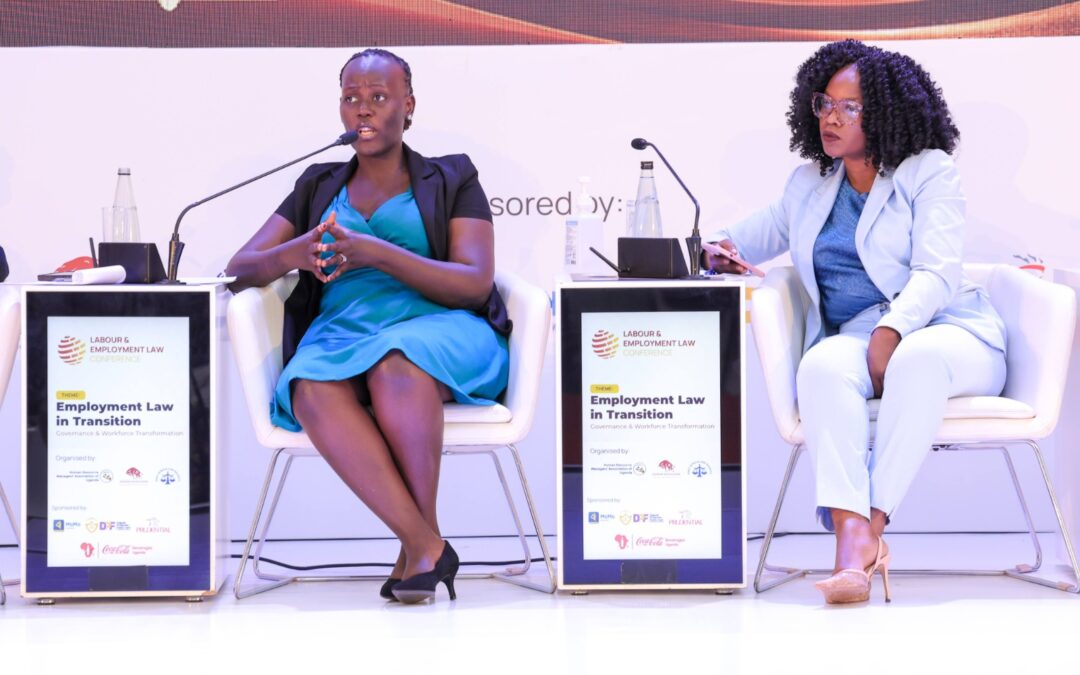
That was the undercurrent running through every session at the 5th Labour and Employment Law Conference 2026, held at Mestil Hotel & Residences. Two days. A packed room of judges, lawyers, and HR leaders. One theme: Employment Law in Transition, Governance and Workforce Transformation.
What came out of it wasn’t just theory. It was a clear-eyed look at what organisations are getting wrong, what courts are no longer willing to overlook, and what it actually means to lead people responsibly in 2026.
The Law Is Robust. The Workplace Is Moving Faster.
Hon. Lady Justice Linda Lillian Tumusiime Mugisha opened the conference by grounding the conversation in Uganda’s constitutional and legal framework. The principles are solid: fair labour practices, non-discrimination, equitable working conditions.
But her message carried a tension that set the tone for everything that followed. The legal framework exists. What it has not fully caught up with is the speed of change in how, where, and for whom people work.
New employment models. AI-driven decisions. Cross-border work arrangements. These are not future problems. They are present ones. And the people responsible for interpreting the law, practitioners and courts alike, must actively ensure protections stay relevant as the workforce transforms around them.
The Courtroom as a Mirror
Hon. Lady Justice Monica Mbaru reframed how we should think about employment disputes. A case reaching the courtroom is rarely just a legal problem. It is often the visible symptom of a governance failure that started much earlier.
Workplace disputes reflect organisational behaviour. Culture. Leadership. Decision-making. As workforce structures evolve, whether through gig work, platform employment, or hybrid models, governance must evolve alongside them.
Her message was direct: strong governance is not optional in a transforming workplace. It is the foundation everything else rests on.
AI Is Not Accountable. People Are.
Dr. Robert Kirunda’s session was one of the most urgent of the conference.
As artificial intelligence moves deeper into HR and workforce management, from recruitment screening to performance evaluation, the temptation is to treat algorithmic decisions as neutral. They are not.
Dr. Kirunda warned of algorithmic discrimination, where the bias lives in the data rather than in anyone’s intent. The legal risk is real. And the accountability cannot be passed to a system.
His defining line stayed with the room long after the session ended:
“If a decision cannot be explained in human terms, it should not be made.”
Leadership cannot outsource accountability. Not to technology. Not to policy. Not to HR. The responsibility sits with the people at the top.
What Courts Are Actually Looking For
Hon. Justice Anthony Wabwire Musana brought the conversation down to ground level by walking through trends from the Industrial Court between 2022 and 2026.
The picture that emerged is one of courts paying closer attention, not just to what an organisation’s policies say, but to how those policies are actually applied.
The shift is significant: substance over form. Courts are examining real workplace conduct. And what they are consistently looking for includes procedural fairness in disciplinary processes, transparency and access to evidence, proper documentation, consistency in how rules are applied, and clarity in employment relationships, especially where new work arrangements blur traditional structures.
The message was unambiguous. Governance failures and poor processes are no longer defensible. Not in a legal landscape that is actively adapting to the realities of workforce transformation.
The Most Dangerous Exits Are the Quiet Ones
Lilian Olouch-Wambi, Partner at Oluoch Kimori Advocates and Head of the Employment Law Cluster at the East African Law Society, delivered what may have been the session most likely to make HR and legal teams uncomfortable in the best possible way.
Her focus: mutual separation agreements and constructive dismissal.
The common assumption is that a signed separation agreement protects the employer. Courts are increasingly challenging that assumption. What matters is not just the signature. It is how the agreement was reached.
Were the conditions of employment made intolerable before the “mutual” exit? Was there pressure, exclusion, or quiet marginalisation before the exit was framed as a choice?
Her words cut through:
“The most dangerous employment disputes do not begin with a dismissal letter. They begin quietly, with pressure, exclusion, and exits framed as mutual.”
Employee exits are a major legal risk area. And managing them well requires governance, not just paperwork.
The Board Cannot Delegate This
A standout panel moderated by Phillip Karugaba made clear that people governance has moved from an HR function to a board-level responsibility.
Culture, legal risk, employee wellbeing, and the ethical use of technology in decision-making. These are no longer topics that land only in the HR director’s inbox. They belong in the boardroom.
Accountability cannot be delegated. And boards that treat workforce governance as someone else’s problem are, increasingly, creating liability for themselves.
Toxic Culture Is a Legal Risk
A panel moderated by Gabriel Iguma, Hub Director at Restless Development Uganda, tackled one of the most difficult conversations in any organisation: what happens when the culture itself is the problem.
Harassment. Bullying. Sexual harassment. The panel was direct about the patterns organisations fall into. Misconduct is not addressed early enough. Risks are allowed to escalate. And when investigations do happen, they are often handled in ways that create more legal exposure than the original incident.
The core problem is balance: how do you protect confidentiality while maintaining transparency? How do you run an investigation that is genuinely fair to everyone involved?
The answer, according to the panellists, starts with fairness as a non-negotiable foundation. Share evidence where appropriate. Ensure impartial processes. Give employees a genuine opportunity to respond.
And the broader lesson: workplace culture is not just a people issue. It is a legal and governance risk. Full stop.
Transformation Without Governance Creates Risk
Running through the sessions on outsourcing, discipline, and evolving employment structures was a consistent thread.
Control creates liability. Where an organisation retains control over how work is done, regardless of the label attached to the relationship, it may also retain legal responsibility for the people doing it.
Fairness, transparency, and consistency in disciplinary processes are not aspirational. They are what courts expect.
And throughout all of it, one principle held: workforce transformation without governance does not mean progress. It means risk.
The Bottom Line
The 5th Labour and Employment Law Conference 2026 did not leave its attendees with easy answers. What it gave them was something more valuable: a clear picture of the stakes.
The world of work is changing. Employment law is changing with it. And organisations that treat governance as a compliance exercise rather than a genuine commitment will find themselves on the wrong side of both.
The future of work is not just about technology, flexibility, or efficiency. It is about whether people are treated with fairness, dignity, and accountability at every stage of the employment relationship.
That is what the law is moving toward. The question is whether organisations are willing to move with it.